

There’s been a flurry of announcements following IBM’s commercial release of the IBM Q System One, so I read a couple additional articles in follow-up to yesterday’s post.
First up: Goppion for the future: the display case for IBM first commercial quantum computer
IBM also announced plans to open its first IBM Q Quantum Computation Center for commercial clients in Poughkeepsie, New York in 2019.
This is a good time to take an aside and do a little “about the author.” My first job coming out of college was in the IBM System z mainframe development team located in Poughkeepsie, NY. I met some of the most intelligent, hard-working people I’ve ever come across in my professional career, and they were nothing short of a “family” dedicated to building amazing technology. So, it’s hear-warming to hear this will also be the home of the Quantum Computation Center. It should also be noted Poughkeepsie boasts a state-of-the-art Executive Briefing Center (EBC) – that helps too.
Much as classical computers combine multiple components into an integrated architecture optimized to work together, IBM is applying the same approach to quantum computing with the first fully integrated universal quantum computing system.
I think that just means putting it all in a box that you can actually transport. Think PC, but then think mainframe, which IBM has a history of putting extensive design work into much as they’ve apparently done with the Q System One.
IBM Q System One is comprised of a number of custom components that work together to serve as the most advanced cloud-based quantum computing program available, including:
- Quantum hardware designed to be stable and auto-calibrated to give repeatable and predictable high-quality qubits;
- Cryogenic engineering that delivers a continuous cold and isolated quantum environment;
- High precision electronics in compact form factors to tightly control large numbers of qubits;
- Quantum firmware to manage the system health and enable system upgrades without downtime for users; and
- Classical computation to provide secure cloud access and hybrid execution of quantum algorithms.
Let’s break this down. ‘Stable and auto-calibrated’ – makes, we read previously that quantum systems are highly sensitive to vibrations. ‘continuous cold’ – check, need that. ‘high precision electronics in compact form’ – I can only imagine getting the components down to a portable size has been an immense challenge. Think of early cell phones and how mobile phone industry has been able to consolidate technology. We’re at this point of history with quantum computers:
‘Quantum firmware’ to manage the health and enable system upgrades. That’s basic block and tackling for building a computer, but >quantum< firmware does have a nice marketing ring. ‘classical computation to provide secure cloud access and hybrid execution’ – This is a more subtle statement, but raises a common theme around quantum computers: the notion that quantum computers will operate in a hybrid mode with classical computers. 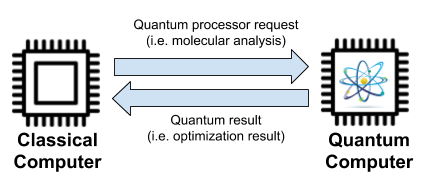
Extending the point in the previous post, the decision to use Goppion (self marketed as the “The Art of Case Design”) is impressive. IBM clearly “spared no expense” (Jurassic Park homage) on this prototype system. Congrats to IBM for combining all the necessary mechanical and environmental requirements to create qubit stability AND make it visually attractive, if not beautiful. It will be interesting to follow adoption of the system.
Here it is one more time…pretty nice!
Also, check out the video: https://youtu.be/LAA0-vjTaNY

 Quantum Journey Blog